Ask any successful creator what separates them from the people who quit, and you will get the same answer: not talent, not luck, not a better camera — showing up. Consistency is the creator economy's whole game. The algorithm rewards it, audiences rely on it, and revenue compounds on it: a channel that posts weekly for a year almost always beats a channel that posts brilliantly twice and then vanishes for three months. But here is the part nobody tells you: consistency is not a personality trait, and it is not about willpower. It is a system. Motivation gets you through the first two weeks; systems carry you through the years. Here is how to build the system.
TL;DR: Consistency is a system, not a character flaw — you do not need more discipline, you need fewer decisions. Batch content in one weekly session so your posting schedule never depends on daily motivation. Start with a "minimum viable schedule" you can actually keep (even once a week), build a buffer of 3–5 finished posts, and design your environment so starting is easy. When life hits — and it will — the buffer and the pre-made calendar keep you on air while you recover. Track streaks and celebrate small wins; motivation follows evidence of progress, not the other way around.
Why consistency beats brilliance
The numbers are brutal and freeing at the same time. A mediocre video posted every week for a year outperforms a brilliant video posted once a quarter — because the algorithm and the audience both learn to expect you. Every upload is a data point that trains the system to show you to the right people, and every post is a touchpoint that keeps you in your audience's mental feed.
Consistency also builds trust in a way individual hits never can. Your audience is not subscribing for one great post; they are subscribing for a reliable experience. "They post every Thursday" is a promise. Broken promises are why followers quietly unfollow — not because your content got worse, but because they stopped knowing when to expect you.
And consistency is the only input you fully control. You cannot control whether a post goes viral, whether the algorithm favors you, or what the competition does. You can control whether you showed up this week. Creators who internalize that stop chasing results and start building the one asset they own: a track record.
The system, part 1: batch everything
The single biggest consistency killer is requiring daily motivation. If your workflow is "wake up, have an idea, film, edit, post," then every day is a fresh negotiation with yourself — and you will lose that negotiation on bad days. Batching removes the negotiation.
The batch workflow that works for most creators:
- One idea session per week (30–60 minutes): Brainstorm 4–8 content ideas, pick the best, and write rough titles and hooks. Decide the week's plan in one sitting.
- One filming session per week (2–4 hours): Film all of the week's content in one go — same lighting, same setup, same outfit if that matters to you. Setup cost is paid once.
- One editing session per week (2–3 hours): Edit everything you filmed. For short-form, this is where templates shine — a saved Reel/TikTok template turns editing into filling in the blanks.
- One scheduling session (15 minutes): Schedule every post for the week in your scheduling tool and your calendar.
That is one productive day per week instead of seven daily battles. Batch day is a system; daily motivation is a coin flip. (For a deeper walkthrough of batching workflows, our content batching guide breaks down the exact timings.)
The system, part 2: build a buffer
A buffer is a stockpile of finished, scheduled content sitting ahead of your publish date. It is the difference between a creator who takes a sick week and a channel that goes quiet — and the difference between a creator who survives a family emergency and one who loses momentum for months.
Start by building a buffer of 3–5 posts: for the next few weeks, produce at your normal pace but post slightly less than you produce, banking the surplus. From then on, your job is not "create content" — it is "keep the buffer full." If you miss a batch week, you post from the buffer and no one ever knows. If life gets truly chaotic for a month, the buffer is your parachute.
The system, part 3: minimum viable consistency
Most creators quit because they set a schedule they cannot keep. Posting daily for three weeks, burning out, and quitting entirely is worse than posting weekly for a year. The fix is minimum viable consistency: the smallest schedule you can maintain for six months straight, even in a bad month.
Pick the schedule that survives real life:
| Schedule | Who it suits | Why it works |
|---|---|---|
| Once a week | Busy creators, long-form, beginners | Sustainable, keeps the algorithm learning |
| 3x a week | Short-form creators with a batch system | Enough frequency for growth, still batchable |
| Daily | Full-time creators with a team or heavy batching | Maximum algorithm exposure, high burn risk |
Rule of thumb: when in doubt, choose the slower schedule. You can always add a second post per week later — but you cannot un-quit.
The system, part 4: design the starting ritual
Every habit expert will tell you the same thing: the hardest part of any task is starting. So make starting stupidly easy. Design your environment so the first step of creating takes under two minutes:
- Leave the setup ready. Camera on the tripod, lights plugged in, microphone mounted. The difference between "start creating" (feels heavy) and "press record" (feels light) is enormous.
- Use a trigger. Attach your creation session to something you already do — "after my Friday coffee, I batch." The existing habit carries the new one.
- Shrink the first step. Do not commit to "edit for three hours." Commit to "open the project and fix one cut." Starting is the win; momentum does the rest.
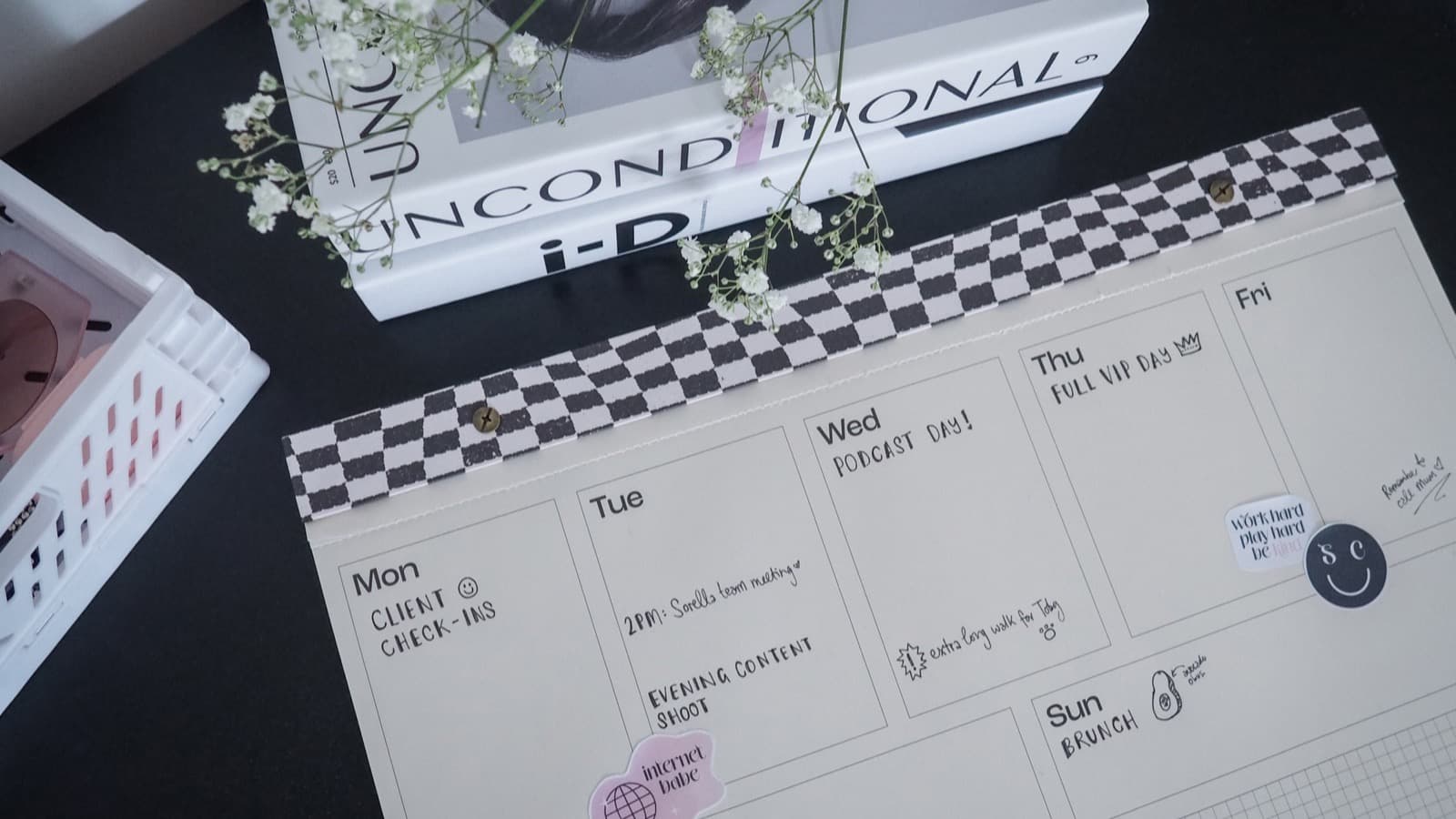
- Put your content calendar somewhere you will see it. A visible plan beats a plan in a notes app you never open.
Motivation: the misunderstood fuel
Motivation is not the engine — it is the fuel gauge. It tells you how full the tank is, and it is nearly always low when you need it most. The creators who stay consistent are not the ones with endless motivation; they are the ones who built systems that run on an empty tank.
That said, you can manage motivation deliberately:
- Track streaks. A simple calendar where you mark every published post. Streaks are addictive in the best way — and the record is a concrete reminder on low days.
- Celebrate tiny wins. One good comment, one new subscriber, one person who said your post helped them. Collect them. On bad days, reread them.
- Keep one "fun" project going. Not everything has to serve the algorithm. A passion post every month or two keeps creating enjoyable, which keeps you showing up.
- Forgive the miss, not the streak. If you miss a week, the worst thing you can do is decide the streak is dead and give up. Miss one, post the next, move on.
When life happens: the recovery plan
Consistency systems are tested by real life — illness, moving, a new job, a baby, a breakup. The plan for these moments is simple and merciful:
- Post from the buffer. This is exactly what it is for.
- Tell your audience. One honest post — "taking a short pause, back next week" — costs nothing and keeps the trust intact. Audiences are extraordinarily forgiving of announced breaks and unforgiving of silent vanishing acts.
- Reduce, don't stop. If you cannot make your full schedule, make a lighter one temporarily — a photo post instead of a video, a repurposed old post, a short update. The goal is to keep the muscle moving, not to hit a metric.
- Rest without guilt. A week off, taken deliberately, is maintenance. Quitting is different — and you will not quit if your system is built.
Consistency without burnout
There is a version of consistency that destroys you, and you should know the difference. Pushing through fatigue, ignoring your body, and treating every missed post as a moral failure is not discipline — it is a fast track to the burnout that ends creator careers. The sustainable version of consistency has three guardrails:
- Consistency is a range, not a cliff. "Post weekly" is the goal; "post 3 out of 4 weeks" is a success, not a failure. The creators who last treat the schedule as a rhythm, not a law. The audience notices a pattern, not a perfect record.
- The buffer is your burnout insurance. When you feel the slump coming — and you will feel it — stop creating new content and live off the buffer for a week. The schedule holds, you recover, and nobody knows the difference. This is what the buffer is for, and using it is a strategy, not a cheat.
- Rest is part of the system. Deliberate breaks — a planned week off per quarter, a lighter schedule in your busy season — are maintenance. Schedule them in advance, tell your audience, and enjoy them without guilt. Creators who never rest do not survive to see their consistency pay off.
Watch for the warning signs: dreading your content, snapping at comments, sleeping badly before batch day, or "just getting through" every session. Those are signals to reduce, not to push harder. Consistency compounds only if you are still in the game.
Accountability that actually works
Willpower is unreliable; accountability is a system. Pick one of these and you will dramatically out-perform your solo self:
- A creator accountability partner. Someone in your niche (or a similar one) who you check in with weekly — both of you share your schedule, report what you shipped, and keep each other honest. The magic is the pre-commitment: "I told Alex I would post Thursday" is harder to break than "I planned to post Thursday."
- Public promises. Announce your schedule to your audience — a pinned community post, a link-in-bio note, a "new video every Thursday" line in your channel description. Public commitments carry real weight, and your audience becomes your accountability system.
- A small group or community. A Discord server, a creator cohort, a paid accountability group. The best ones celebrate wins loudly, which feeds the streak habit, and normalize the bad weeks, which kills the shame spiral.
- Track it somewhere visible. A printed calendar, a whiteboard, a streak counter in your bullet journal — something you see daily. The visual record is a gentle, constant reminder of the person you are being.
The consistency scorecard
Once a month, answer four questions honestly:
- Did I hit my schedule every week? (If not, is the schedule too ambitious or the system broken?)
- Is my buffer bigger than it was last month?
- Did I start each session easily, or was every session a fight? (Fighting means the environment is wrong, not you.)
- Do I still enjoy creating? (If the answer is no, change the content before you change the schedule.)
Consistency is not about being superhuman. It is about making the next post so easy that you would have to actively try to fail. Batch your work, keep a buffer, pick a schedule you can keep, and make starting trivial — then let time do what time does. A year of showing up beats a lifetime of intending to, and it starts this week, not next month.