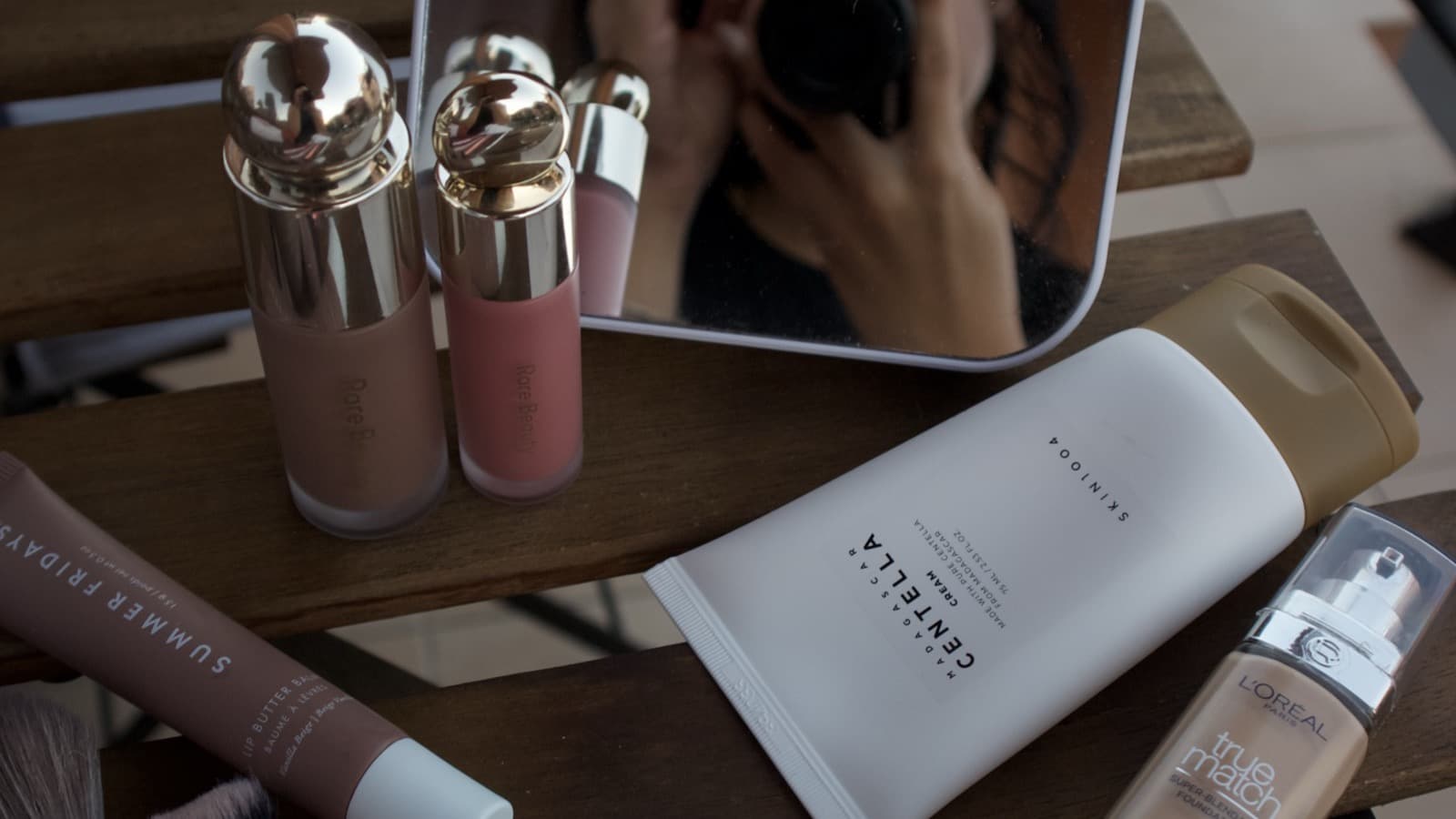
Beauty is one of the most reliable niches in the creator economy: the products are cheap to buy, the content is easy to film at home, the audience intent is commercial, and brands have budgets that refresh every season. It is also one of the most crowded — which is why the creators who grow are the ones with a defined beat, not the ones with the best camera. Here is the honest, step-by-step version of how to build a beauty channel in 2026.
TL;DR: Pick a specific beat (a sub-niche, a promise, and a repeatable format) instead of posting generic makeup content — "affordable skincare for sensitive skin" beats "beauty content" every time. Shoot with a phone, a window, and a colour-accurate light, and always do a swatch test in the same conditions so your results are trustworthy. Growth comes from search-friendly tutorials, honest reviews, and one sub-niche insight per week — not from chasing every trend. Monetization runs in layers: affiliate links and TikTok Shop first, then seeded PR packages, then paid brand deals, then your own products.
Beauty is a niche, not a genre
The mistake most beginners make is treating "beauty" as their niche. It is not a niche — it is a shelf. Inside it sits more than a dozen genuinely different audiences, and almost none of them want the same content:
| Sub-niche | Core audience | Content that works | Monetizes via |
|---|---|---|---|
| Makeup artistry | Technique-driven viewers, aspiring artists | Tutorials, transformations, colour theory | Courses, kits, artistry bookings, brand deals |
| Skincare science | Ingredient-literate buyers, acne and barrier concerns | Ingredient breakdowns, routine builds, myth-busting | Retailer affiliates, dermatologist-adjacent brands |
| Skincare on a budget | Students, price-sensitive buyers | "Best under $15", dupe tests, drugstore hauls | Affiliates, high-volume brand deals |
| GRWM lifestyle | Audience there for the person first | Get-ready-with-me, vlogs, chatty formats | Fashion and accessory deals, memberships |
| Hair care and styling | Curly, fine, or thinning hair communities | Wash-day routines, styling, product testing | Hair tool brands, salon partnerships |
| Nails | Huge TikTok-native audience, strong DIY culture | Nail art tutorials, gel systems, dupes | Nail brands, self-published product lines |
| Fragrance | Passionate, high-spend collectors | Dupe comparisons, layering, "notes explained" | Designer dupes, discovery sets, luxury affiliates |
| Mature beauty and anti-aging | 40+ buyers with the highest spend per purchase | Routines for texture and fine lines, honest expectations | Prestige skincare, beauty devices |
| Men's grooming | Underserved, high-intent buyers | Shaving and beard routines, routine builds | Grooming brands, subscription boxes |
Pick one shelf and go deep. You can broaden later; you cannot build trust while covering nine categories at once.
The three-layer beat: sub-niche, promise, format
Once you have chosen a shelf, define your beat in one sentence with three parts:
Sub-niche + audience + promise + repeatable format.
Examples that work because they are specific enough to be remembered:
- "Fragrance dupes for people who refuse to spend $300, tested side by side."
- "Skincare routines for sensitive skin, built for under $60, with the ingredient list explained."
- "Blowout and styling tutorials for fine hair, filmed with the same lighting every week so you can see the result."
The format matters as much as the promise. Pick one shape you can produce weekly — tutorial, review, comparison, routine — and build a named series around it. Series create the two things a beauty account needs: return viewers, and a thumbnail that signals what they will get.
The content stack that grows a beauty channel
Five formats do almost all the work. Post them in rotation instead of inventing new formats each week:
- The teaching tutorial — a technique explained so it transfers. Search-friendly titles ("how to apply cream blush on mature skin") outperform clever ones in this niche because people search beauty problems constantly.
- The honest review — product first, verdict in the first 15 seconds, evidence on camera. The fastest trust-builder you have.
- The dupe test — the single highest-retention format in beauty. Side-by-side, same light, same angle, real wear test. It also converts affiliate links better than anything else you can make.
- The myth-bust — one claim, tested or explained with a credible source. High share rate, and it positions you as the person who knows rather than the person who buys.
- The routine build — slot products into an order and a purpose (morning, night, travel). Routines get saved, and saves are the strongest signal a beauty post can earn.
Filming beauty content that actually looks credible
You do not need a studio. You need consistency and colour accuracy — because beauty viewers are checking your results, and bad light makes results look fake.
Build this minimum setup:
| Element | What to use | Why it matters |
|---|---|---|
| Camera | Your phone's rear camera at 4K, locked focus and exposure | Front cameras process skin heavily, which reads as misleading in beauty |
| Light | A window with indirect daylight plus one fill light, or a single bi-colour LED at 5000–5600K | Mixed colour temperatures make foundation look wrong on camera |
| Background | One clean, well-lit backdrop you use every time | Recognisable framing is retention; also makes your feed look like a library |
| Close-ups | A clip-on macro or a phone with a decent telephoto | Beauty proof lives in texture: swatches, wear, application detail |
| Audio | Any lav or shotgun mic, or voiceover after filming | Talking through technique while filming degrades both |
| Swatch control | Same light, same arm, same timestamp | Lets you claim comparisons viewers can verify |
Two production habits separate credible accounts from pretty ones: film results in real conditions (a full day of wear, an actual humid day), and label your footage honestly (filter on or off, no colour grading that changes the product's shade). Audiences forgive low production value. They do not forgive "this is the same colour" when it visibly is not.
Trust is the currency: disclosure, honesty and safety
Beauty is the niche with the most regulatory attention and the fastest audience backlash. Three rules keep you safe:
- Disclose every material connection, every time. Paid, gifted, affiliate, or your own brand — a clear on-screen and in-caption disclosure protects you and your audience. The rules have not loosened; the enforcement has sharpened.
- Never claim results you did not get. No "cleared my acne in three days" from a single use. If you are showing progress, keep the timeline honest and show the boring weeks too.
- Do not give medical advice. For skin conditions, position yourself as the person testing and researching, and point people to a professional. The niche rewards humility about active ingredients and prescription territory alike.
Gifted products are income at fair market value, and brand relationships come with usage rights and exclusivity terms. Treat the paperwork as part of the job — the creators who get burned in beauty are almost always the ones who signed a deal without reading the exclusivity window.
How a beauty audience actually grows
Growth in beauty comes from solving problems people type into a search bar, then converting that traffic with a personality they want to follow.
- Be searchable first. Titles and on-screen text should contain the problem, the product, and the audience: "hooded eye makeup for over 50s", "gel nails at home without a lamp". Search traffic compounds; trends do not.
- Use Pinterest as a second life. Makeup and hair are visual search categories. One tutorial repurposed as three pinned images keeps bringing new viewers months later.
- Cross-post with intent, not automation. Short-form clips earn discovery; long-form tutorials earn loyalty. Strip the TikTok watermark, rewrite the hook for each platform, and keep your good content off the cutting room floor.
- Show up in comments on other people's videos. A genuinely useful answer under a larger creator's post converts better than another upload.
- One insight per week. "I tested 12 moisturisers and three pills" is an insight. "Aesthetic shelfie" is decoration.
Getting paid: the beauty monetization ladder
Beauty pays in layers, and the layers stack in order. Do not skip to the top.
| Stage | What it looks like | Realistic scale |
|---|---|---|
| 1. Affiliate links | Product links in your bio, TikTok Shop, retailer programs | First income, no brand relationship needed, 5–20% commissions |
| 2. Seeded and gifted | PR packages in exchange for content, no fee | Builds your library of products and proof for pitches |
| 3. Paid brand deals | Briefed campaigns, fee plus usage terms | Starts meaningfully around 5–10K engaged followers in beauty |
| 4. Retainers and ambassadorships | Ongoing monthly content for one brand | 3–12 month contracts, predictable revenue |
| 5. Your own products | A capsule you control — a tool, a refill, an accessory | Highest margin, highest risk, best done after years of data |
Paid post rates track engagement far more than follower count. A beauty account with 15,000 highly engaged followers routinely bills more per post than a 100,000-follower account with a passive audience, so report saves, shares, and comment rate in your pitch — not just reach.
Where does your bio link fit? This niche has more links than any other: shop links, affiliate codes, your latest dupe list, your PO box, your brand contact, your own shop. A Biolinky page lets you stack them in one place and reorder them as your campaigns rotate — swap the top slot from "shop my mirror" to "my morning routine" to "current PR/contact info" without changing the link in a thousand video descriptions.
Five mistakes that stall beauty accounts
- Copying a bigger creator's beat — you inherit the comparison and none of the credibility. Ask what nobody in your sub-niche is answering well yet.
- Buying products you cannot afford to review honestly — it pushes you into paid formats too early and audiences smell it.
- Chasing every trend — off-beat trends bring viewers who never watch again, and they confuse your recommendation graph.
- Ignoring the boring formats — empties, refills, repurchases and "what I stopped using" posts convert and hold attention better than many sponsored ones.
- Never leaving the feed — with no email list or owned destination, a platform change can wipe your business. Capture the audience while the algorithm is on your side.
Your first 30 days
- Week 1: choose your shelf and write your beat sentence. Set up your bio page with your links in priority order and your brand contact.
- Week 2: film three teaching tutorials with the same lighting setup. Publish, and title them for search.
- Week 3: run one dupe test and one honest review. Add affiliate links and disclose them properly.
- Week 4: review your analytics for saves and profile taps, not just views. Double down on the one format that earned saves, and build a name for it.
Beauty rewards consistency and honesty more than gear. Pick one shelf, solve the same audience's problems every week in the same recognisable format, and let proof — swatches, wear tests, honest verdicts — do the selling. The deals follow the trust, not the other way around.